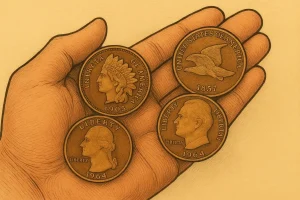
What makes a 1903 Indian Head Penny rare? Distinguishing ordinary coins from premium assets requires an objective evaluation of surface preservation.
Market valuation in 2026 relies heavily on mintage data and physical metal properties.
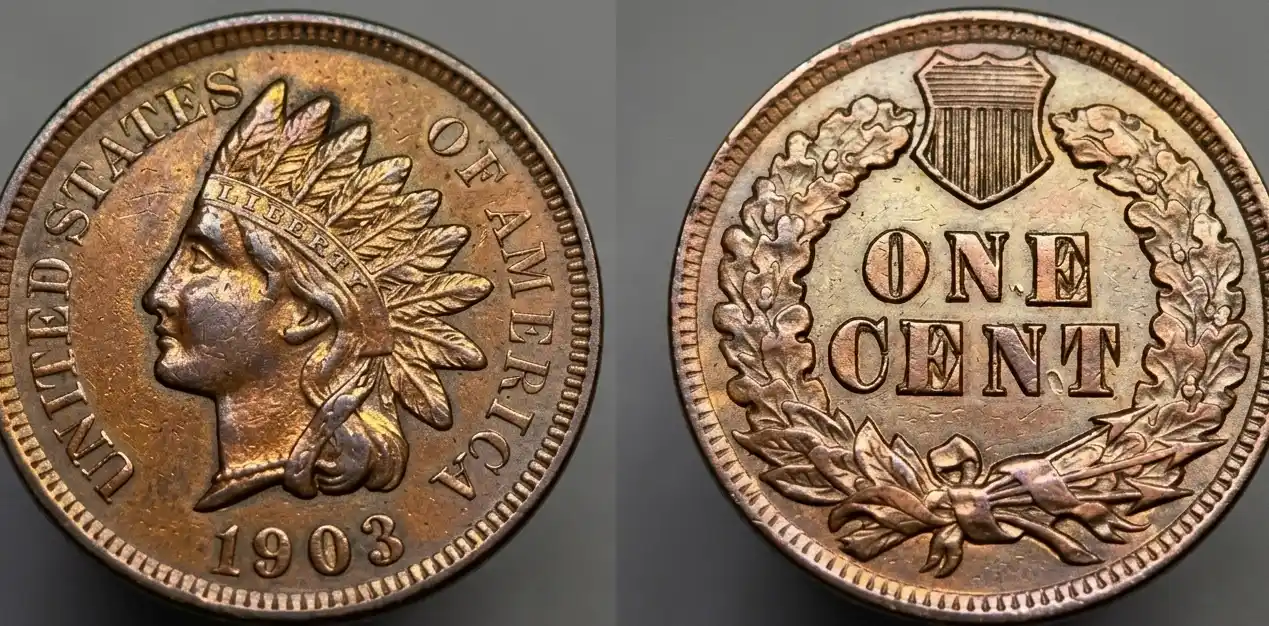
Minting quality determines the final hammer price at public auctions.
Using precision measuring tools allows for accurate rarity classification.
| Parameter | Value |
| Mass | 3.11 grams |
| Composition | 95% Copper, 5% Tin, and Zinc |
| Diameter | 19.05 mm |
| Edge Type | Plain |
| Designer | James B. Longacre |
Mass deviations exceeding 0.10 grams indicate heavy wear or manufacturing errors.
High Copper content ensures the formation of specific toning when interacting with oxygen.
Production Statistics and Mintage Distribution
Total output for 1903 originated from the main facility in Philadelphia.
Absence of a mint mark serves as the standard identifier for this specific year.
Total mintage reached 85,092,703 units.
Such a figure represents a high volume for the Indian Head series.
Abundant surviving specimens make this coin accessible for entry-level portfolios.
Rarity appears exclusively within the highest preservation tiers on the Sheldon scale.
Classification by Sheldon Grading Standards
Professional certification by independent agencies remains a mandatory condition for price fixation.
Wear levels find expression in numerical indices ranging from 1 to 70.
- MS67. Perfect luster lacking any visible flaws.
- MS65. High strike quality permitting minimal contact marks.
- AU58. Traces of friction appearing only on the highest relief points.
- XF40. Clear feather details surviving across most of the design.
- VF20. Noticeable flattening of relief while maintaining basic letter outlines.
Achieving a grade above MS66 transforms the coin into a unique investment asset.
Auction Records
Pricing in March 2026 originates from closed transaction data of the previous quarter.
Inflationary processes and shrinking supply of Red condition coins drive value growth.
| Grade | 1903 Brown Price | 1903 Red-Brown Price | 1903 Red Price |
| MS63 | $45 | $65 | $110 |
| MS64 | $75 | $105 | $190 |
| MS65 | $160 | $230 | $550 |
| MS66 | $420 | $680 | $1,800 |
| MS67 | $2,100 | $3,400 | $11,500 |
Absolute price records for the 1903 cent in MS67 Red condition reached $12,650.
Annual value appreciation for Red category specimens averages 8.2%.
Cause and Effect in Valuation
External factors and market liquidity dictate asset behavior.
Shifting demand vectors → Pricing list adjustments.
- Rising Copper prices → Increased base melt value for heavily worn coins.
- Discovery of new bank bags → Short-term price drops caused by supply surplus.
- Increasing grading standard requirements → Premiums for coins in older holders.
- Digital registry development → Transparency in ownership history boosting buyer confidence.
Low metal cost in modern currency highlights the intrinsic value of early twentieth-century issues.
Surface Damage and Circulation Marks
Mechanical flaws reduce the estimated value by a specific percentage.
Physical impact irreversibly distorting the original design leads to lower demand.
- Field scratches. Price reduction of 45%.
- Rim nicks. Price reduction of 20%.
- Cleaning evidence. Price reduction of 80%.
- Corrosion spots. Price reduction of 30%.
Natural patina occasionally adds 25% to the base value assuming aesthetic appeal.
Loss of original luster moves the coin into the category of common collectible material.
Die Varieties and Mint Errors
Production glitches creating rare design variations attract significant attention.
Identifying micro-details requires the use of a coin value checker app.
- Doubled Date. Visible on digits 1 and 9.
- Off-center Strike. Occurring extremely rarely for this mintage year.
- Die Cracks. Appearing as raised lines on the surface.
Specimens featuring confirmed significant doubling trade at 5 times the standard price.
Minor centering deviations do not affect value when maintaining a full rim.
Correlation Between Mass and Wear Level
Weight reduction serving as an indicator of prolonged circulation.
Mass dependency on condition category:
Mass 3.11g — 3.08g → UNC or AU condition. Mass 3.08g — 3.00g → XF or VF condition. Mass 3.00g — 2.85g → Fine condition and lower. Mass less than 2.80g → Coin unsuitable for professional collections.
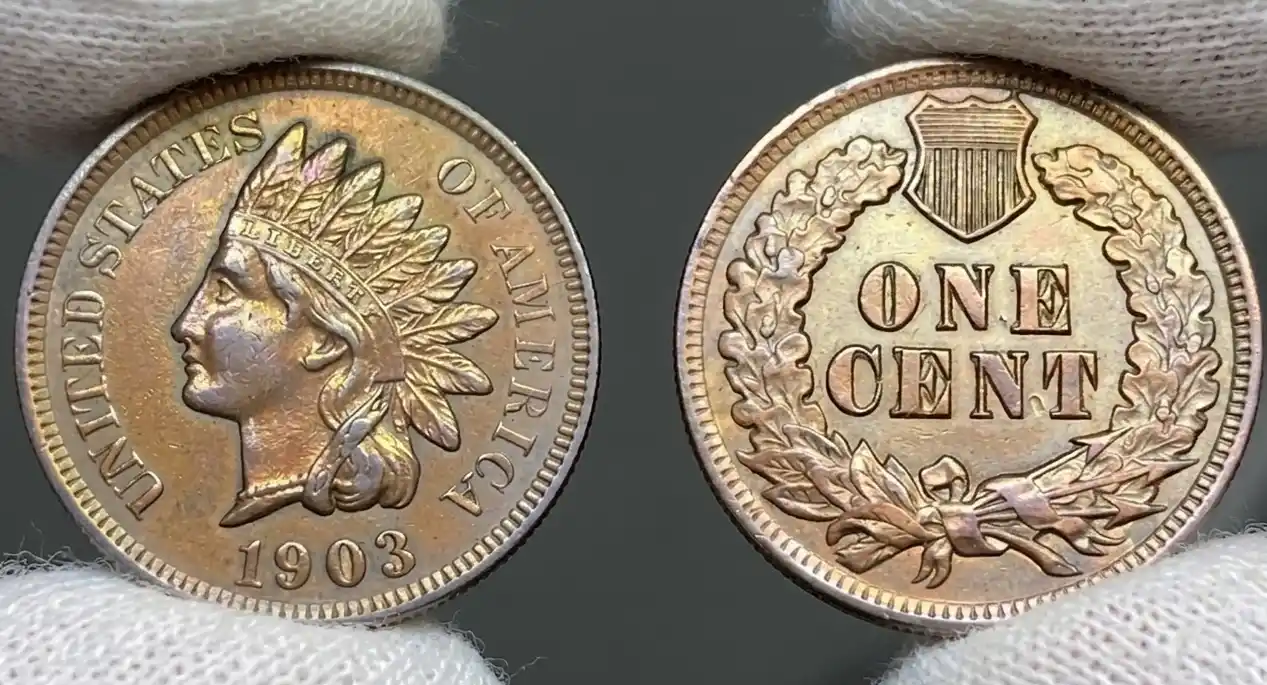
Losing 10% of mass results in total loss of numismatic premium.
Storage Methods for Value Protection
Incorrect placement leading to metal surface degradation.
Oxidation processes accelerating upon contact with moisture and external elements.
- Using PVC albums → Appearance of green sticky residue.
- Storing in paper envelopes → Accelerated rim darkening.
- Contact with skin → Creation of permanent oily fingerprints.
- Inert airtight capsules → Optimal protection method.
Plastic holders guarding the metal against mechanical shocks and aggressive gases.
Comparative Analysis with Adjacent Years
Contextual understanding requiring comparison of 1903 with 1902 and 1904.
Production volumes varying according to the economic needs of the country.
1902 year → 87 million units. Similar price range. 1903 year → 85 million units. Most massive release of the early century. 1904 year → 61 million units. Higher base valuation.
Total 1903 volume allows for building investment portfolios without material shortages.
Self-Inspection Procedures
Preliminary expertise filtering out low-quality specimens.
Action algorithm for home testing:
Weighing on electronic scales with 0.01g precision. Checking magnetic properties to exclude steel counterfeits. Using the free coin identifier and value app. Studying relief details, including headdress feathers. Matching luster with reference samples of Copper coins.
Sharp vertical lines on the shield confirm preservation at the EF level.
Final Liquidity Indicators
Asset liquidation speed depends directly on its grade.
Brown category coins → Sale period from 2 to 4 weeks. Red-Brown category coins → Sale period from 1 to 2 weeks. Red category coins → Realization within 48 hours on specialized platforms.
Demand for flawless 1903 specimens exceeds current supply by 3.5 times.